TrippingPhoto coming soon
1Tripping
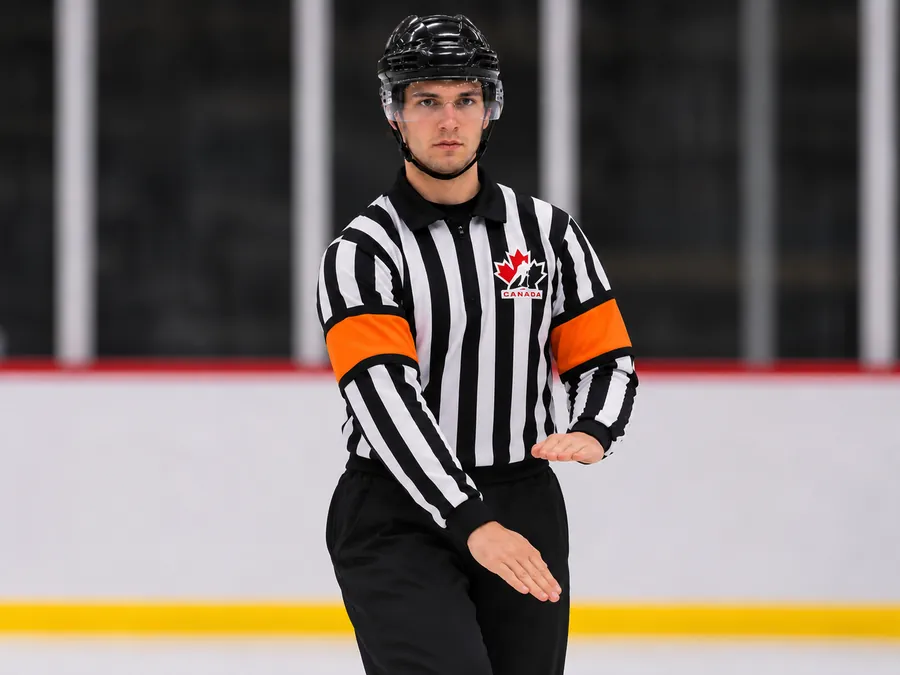
Strike the leg below the knee with one hand, keeping both skates on the ice.
When: Using a stick, skate or body to cause an opponent to fall.
9/14 Learn
Learn each signal, then flip on practice mode and quiz yourself.
Strike the leg below the knee with one hand, keeping both skates on the ice.
When: Using a stick, skate or body to cause an opponent to fall.
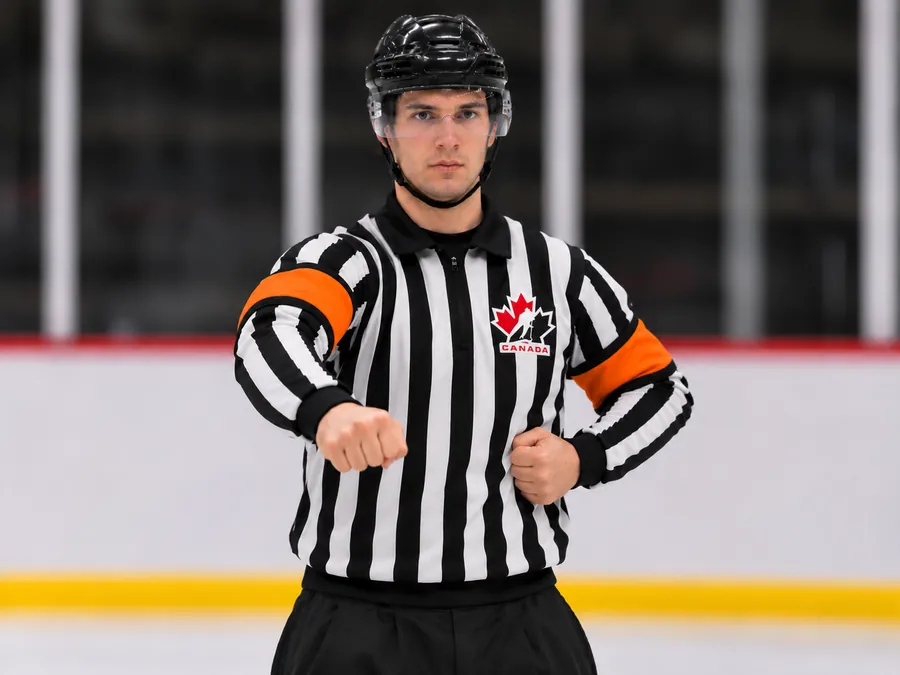
Tugging motion with both arms, as if pulling something toward your stomach.
When: Using the stick to hold back an opponent.
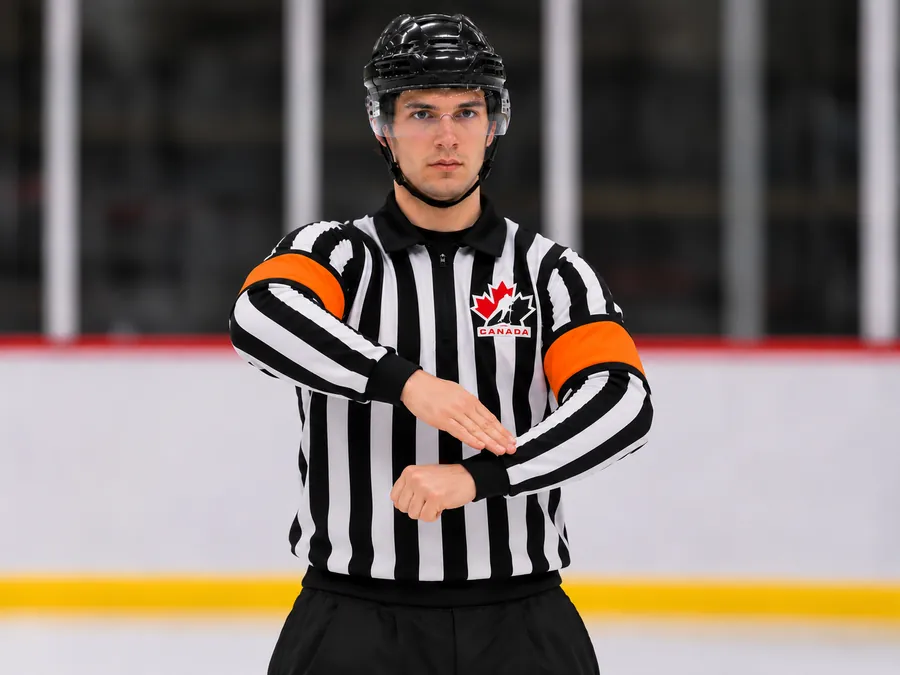
Chop the edge of one hand across the opposite forearm.
When: Swinging a stick at an opponent.
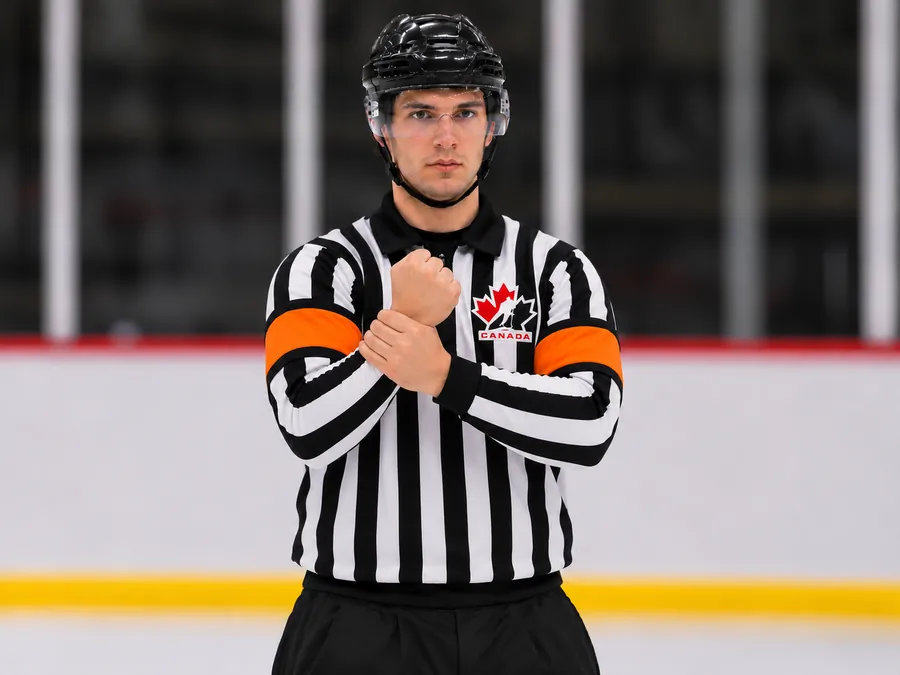
Clasp one wrist with the other hand, in front of the chest.
When: Grabbing or holding back an opponent with hands or arms.
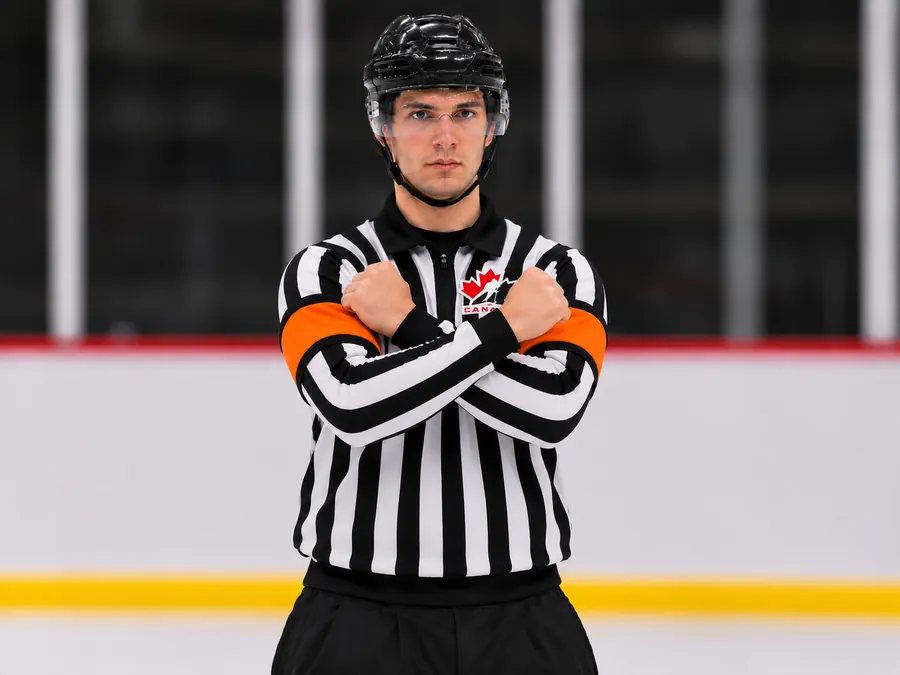
Cross your arms in front of the chest with fists closed, and hold them still.
When: Blocking an opponent who does not have the puck.
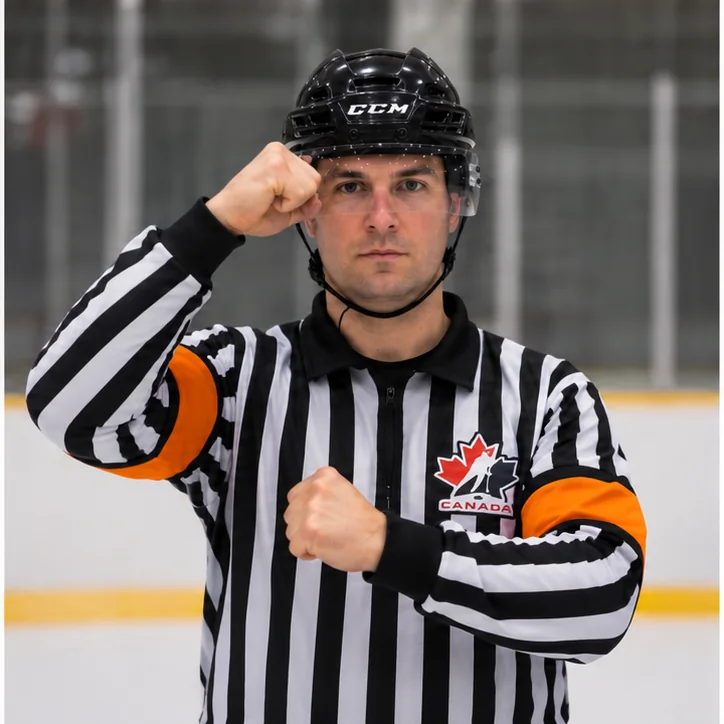
Hold both fists, one directly above the other, at forehead height.
When: Contacting an opponent with a stick carried too high.
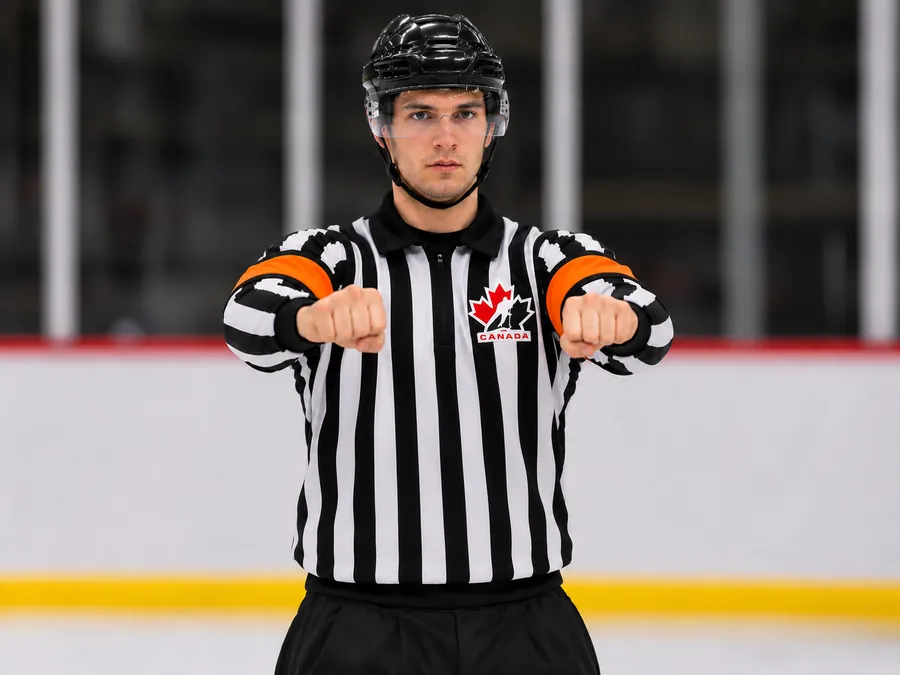
Push both clenched fists forward from the chest and back.
When: Checking an opponent with the stick shaft held in both hands.
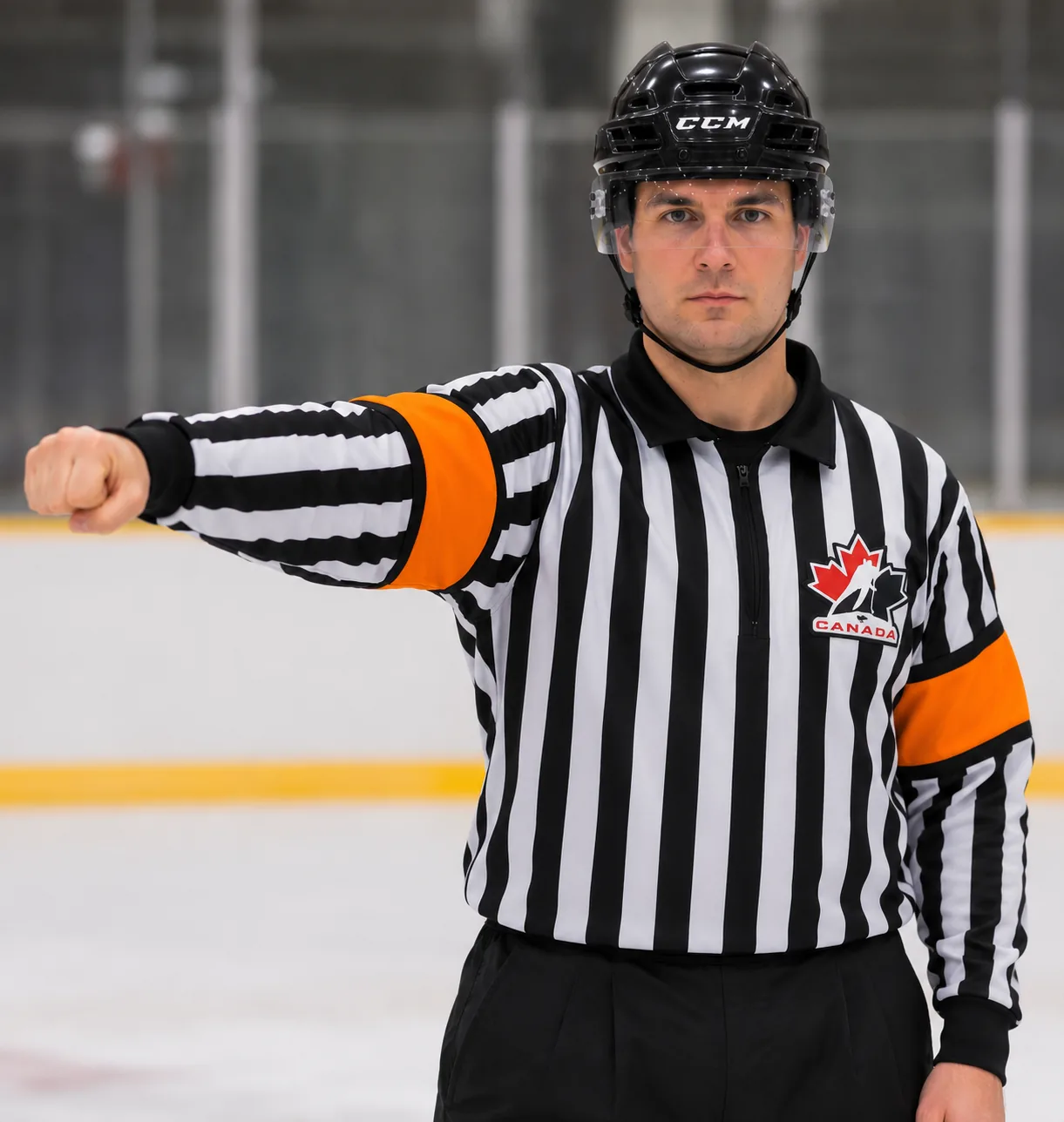
A thrusting motion of the arm and fist, extended out from the side of the body.
When: Unnecessary rough contact, like shoving or punching.
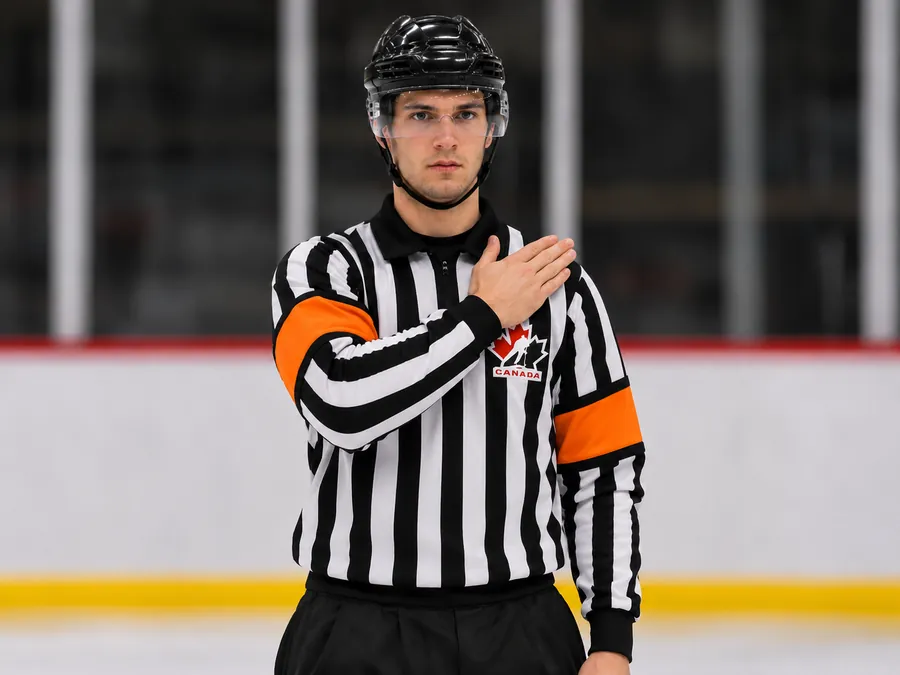
Bring an open hand to the opposite shoulder.
When: A body check in a non-checking division.
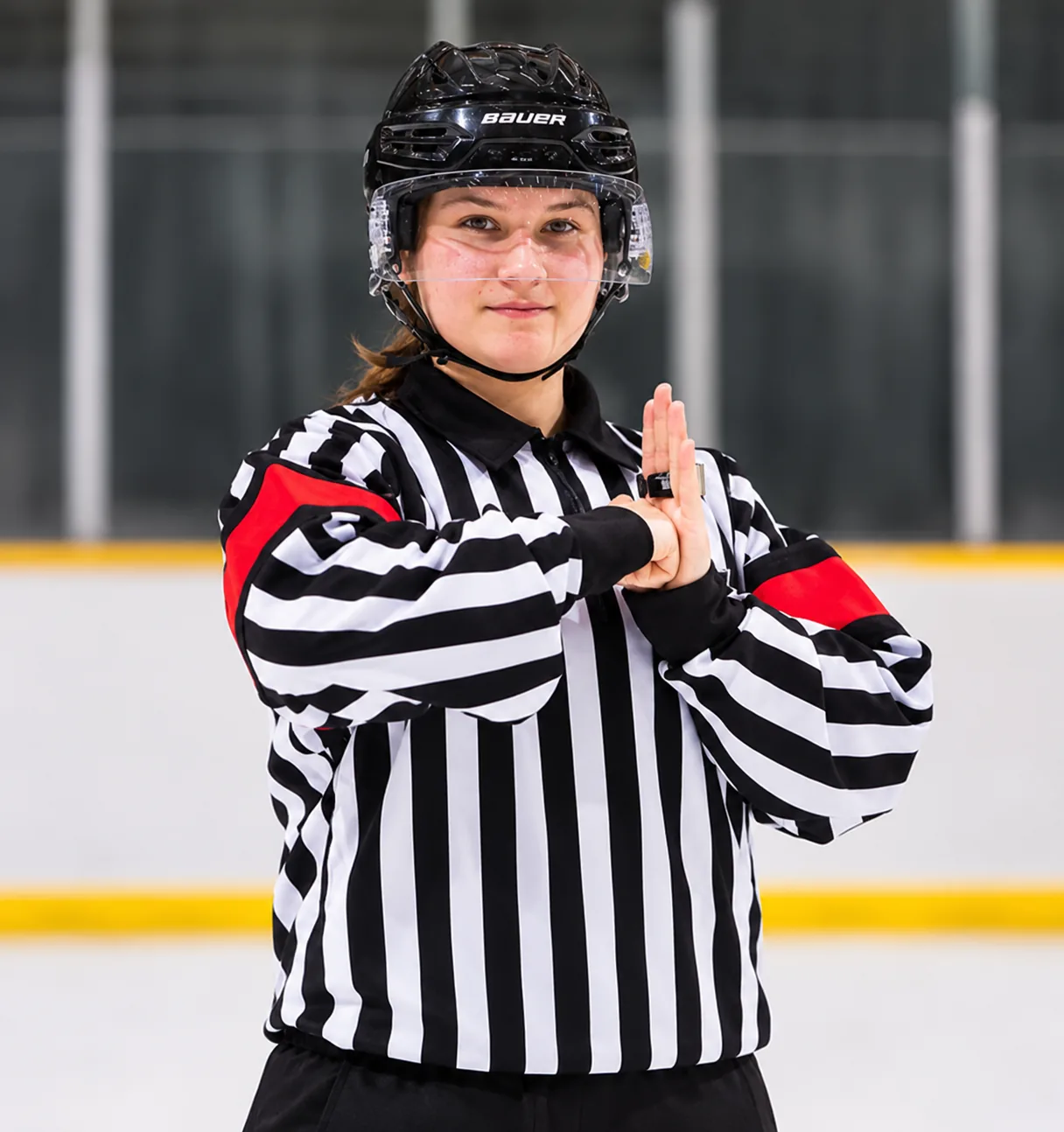
Pound a clenched fist into the open palm of the other hand.
When: Contact that sends an opponent dangerously into the boards.
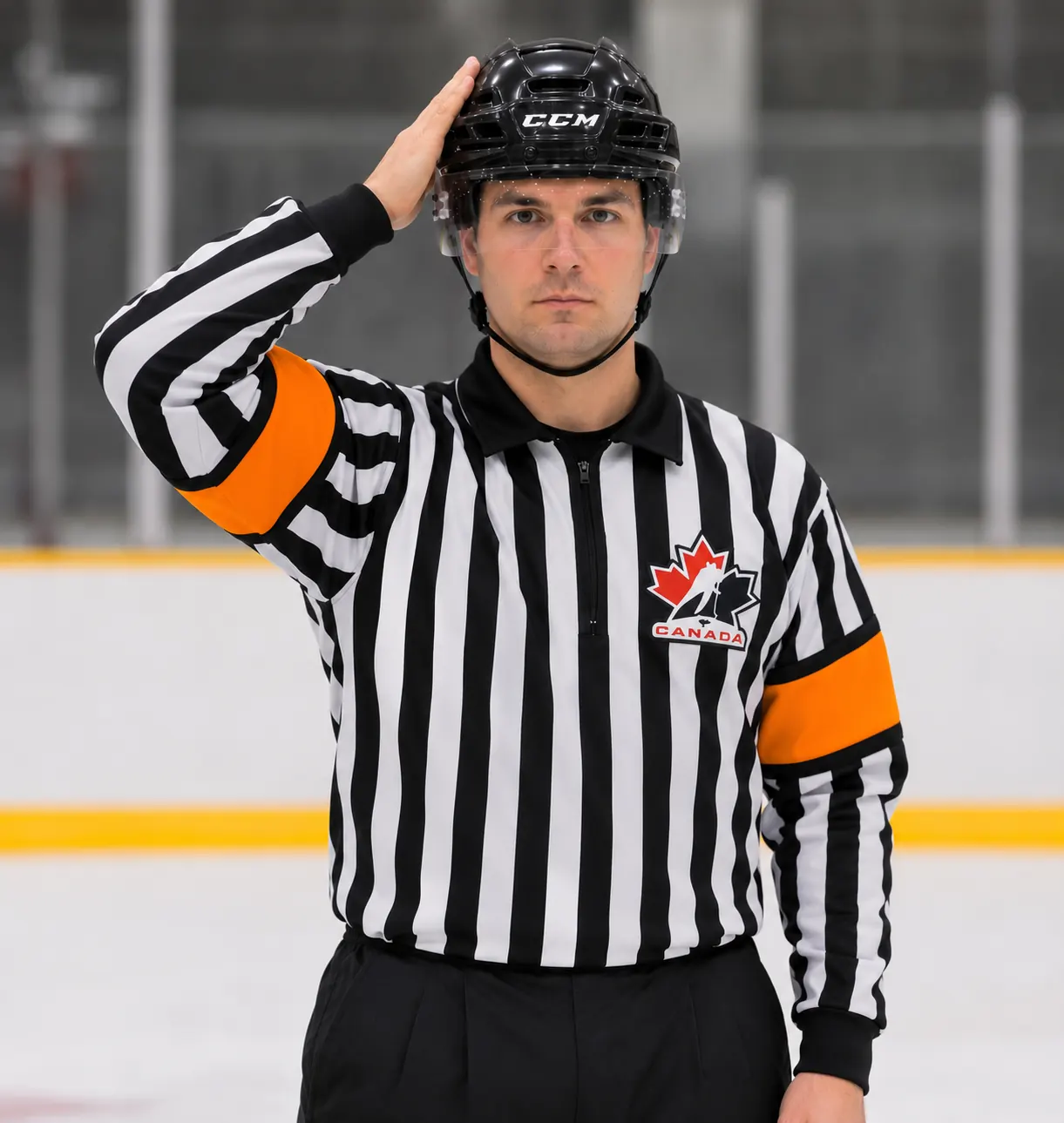
Pat the side of your head (helmet) with the open palm of your non-whistle hand.
When: Any contact to an opponent’s head, face or neck. Called at every age.
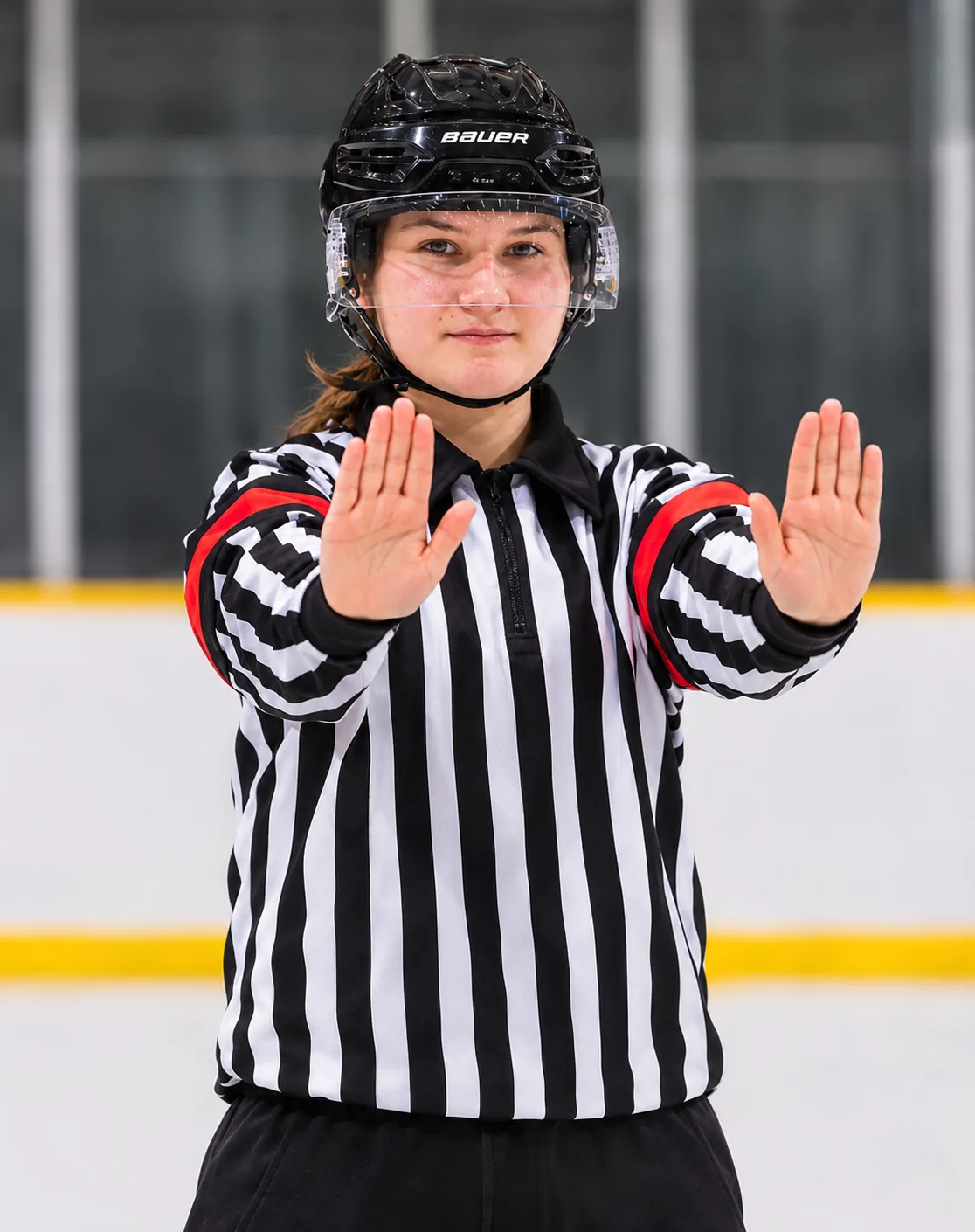
Push both arms forward from the chest, palms open and facing away from you.
When: Pushing or checking an opponent from behind, often into the boards. Very dangerous, even at U9.
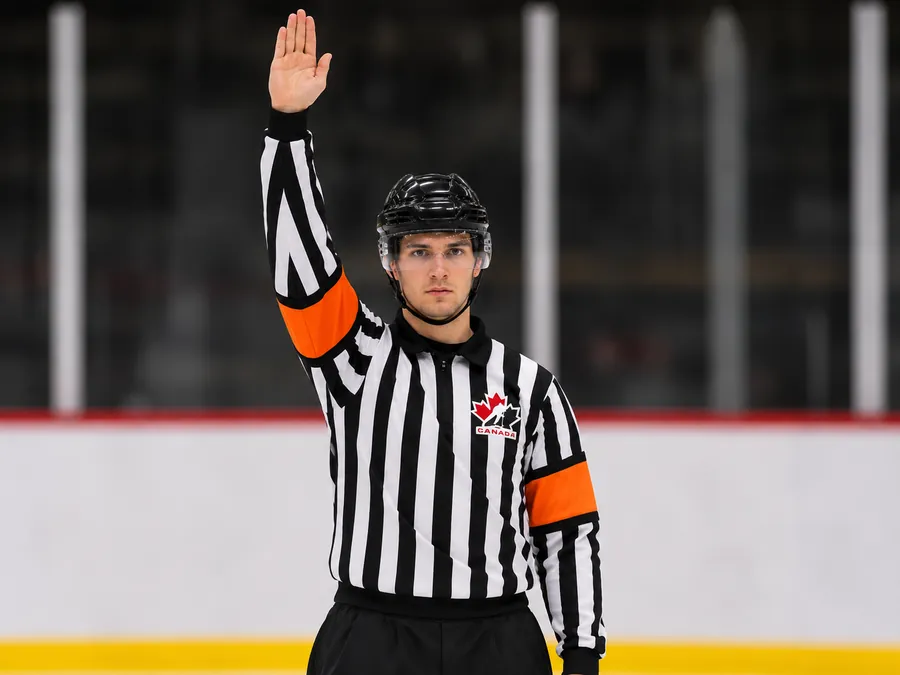
Raise one arm straight above your head until play is stopped.
When: A penalty has been spotted but the other team still has the puck.